
Museo di Castelvecchio
The Scaliger castle and Carlo Scarpa's museum
The red-brick castle beside the Adige houses Verona's collection of medieval sculpture and painting. Along the museum route, Cangrande della Scala appears on horseback on a projecting concrete plinth.
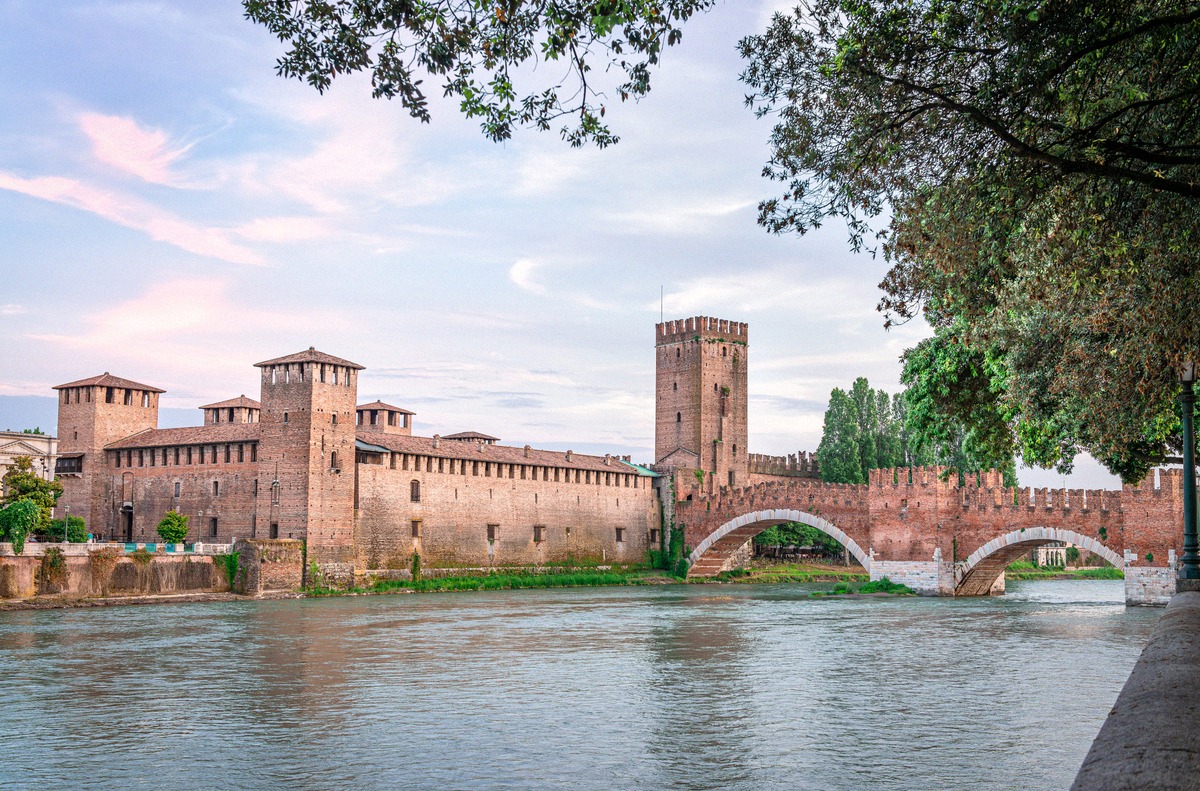
From fortress to museum
Verona's rulers built Castelvecchio on the banks of the Adige in the 14th century. Its walls lead directly onto Ponte Scaligero. The museum entrance is on the city side, on Corso Castelvecchio. A route through the castle takes in medieval stone figures, weapons and paintings dating up to the 18th century. For anyone interested in architecture, it also shows how Carlo Scarpa turned the rooms of a fortress into a museum. He inserted walkways and plinths into the old fabric, creating changing views between the walls and the works of art.
Cangrande on horseback
The equestrian statue of Cangrande I della Scala originally belonged to his tomb beside Santa Maria Antica, behind Piazza dei Signori. A copy stands there today. To protect the stone, the city moved the original to Palazzo Pompei in 1909. It came to Castelvecchio in 1926. When Scarpa redesigned the museum in the 1960s, he placed horse and rider on a cantilevered plinth. From below, you look up at the figure; from the upper walkway, you see it almost at eye level.
Along the river
A short path from the castle gate leads onto the battlemented bridge. From the opposite bank, its largest arch and the castle towers can be seen together. To reach San Zeno, stay on the museum side of the river and follow the Adige westwards.