
Ponte Scaligero
The battlemented bridge at Castelvecchio
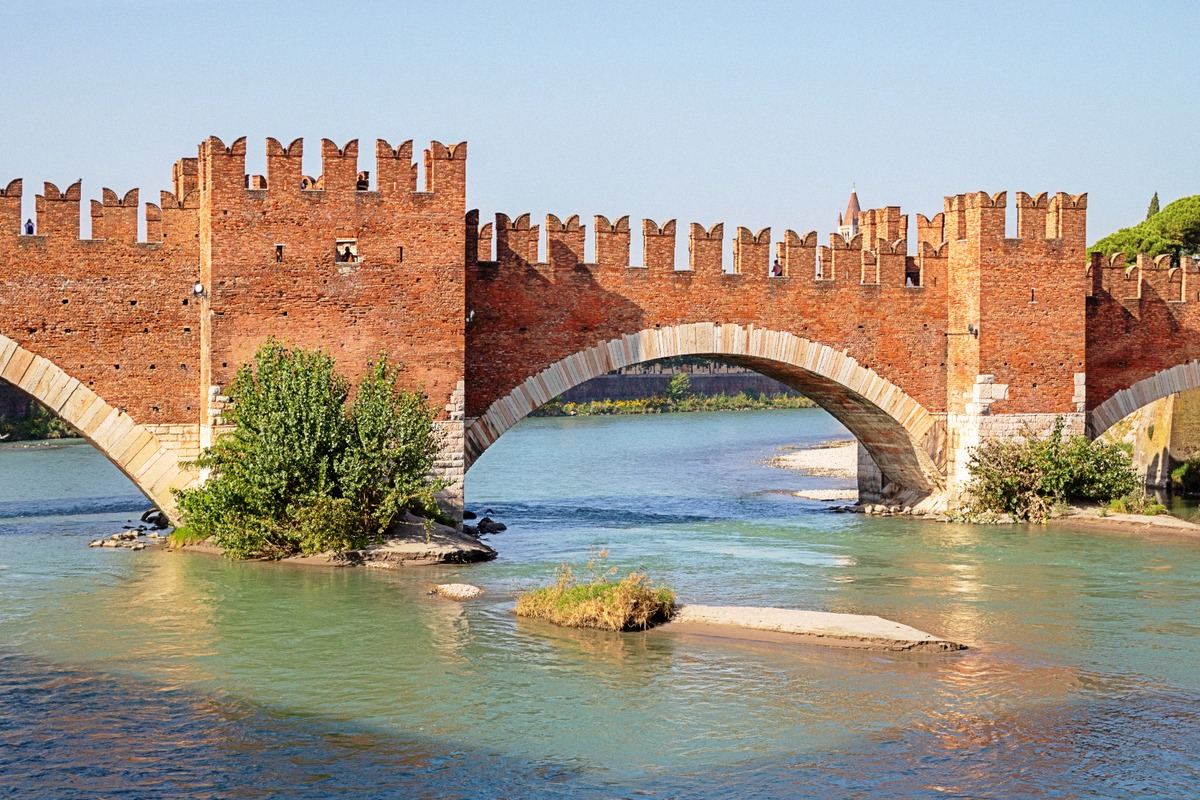
Castelvecchio's battlements continue across the Adige. Three arches of unequal span support Ponte Scaligero, linking the castle with the Arsenal on the opposite bank.
An escape route from the castle
Cangrande II della Scala had the bridge built between 1354 and 1356 as part of his fortifications. In the event of an uprising, it gave him a way out of Castelvecchio, across the river and onwards towards Tyrol. From the path, the close connection between castle and bridge is clear: the crossing begins directly beside the keep.
Three arches across the Adige
The walkway runs between high brick walls topped with battlements. The arches beneath are best seen from the riverbank. They span the river in three openings of unequal width. The builders incorporated Roman column capitals into the first pier on the castle side. One of these leaf-carved stones now stands beside the walkway above. Those within the pier are visible only when the water is very low.
Rebuilding after the war
At the end of the Second World War, retreating German troops blew up the bridge. It was subsequently rebuilt across the Adige in its historic form. Further ancient fragments came to light in the foundations during the reconstruction. A Roman gravestone now stands at the entrance on the Arsenal side.
On foot to the Arsenal bank
Ponte Scaligero is reserved for pedestrians. From the opposite bank, the red-brick arches can be viewed together with the castle. To continue to San Zeno Maggiore, cross back to the castle side. The basilica lies further west on the same side of the Adige.
Frequently asked questions
Are Ponte Scaligero and Ponte di Castelvecchio the same bridge? +
Nearby
Museo di Castelvecchio
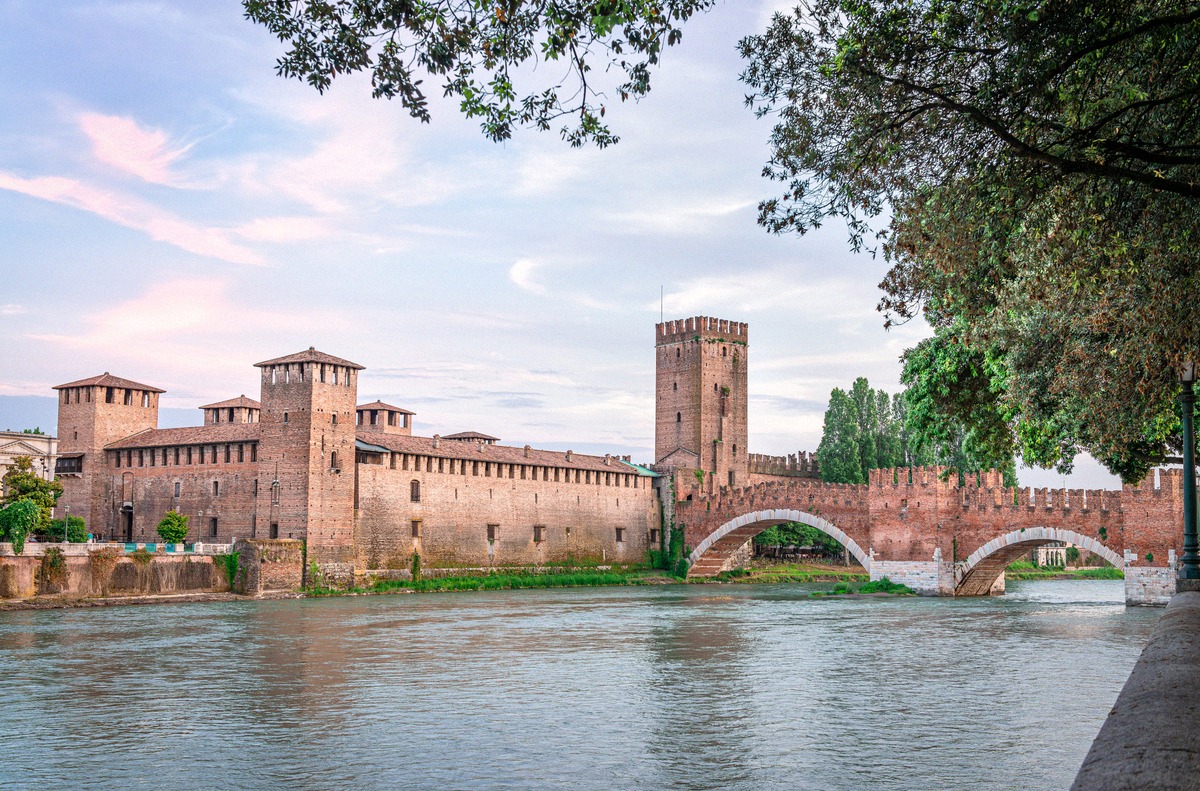
The red-brick castle beside the Adige houses Verona's collection of medieval sculpture and painting. Along the museum route, Cangrande della Scala appears on horseback on a projecting concrete plinth.
Arena di Verona
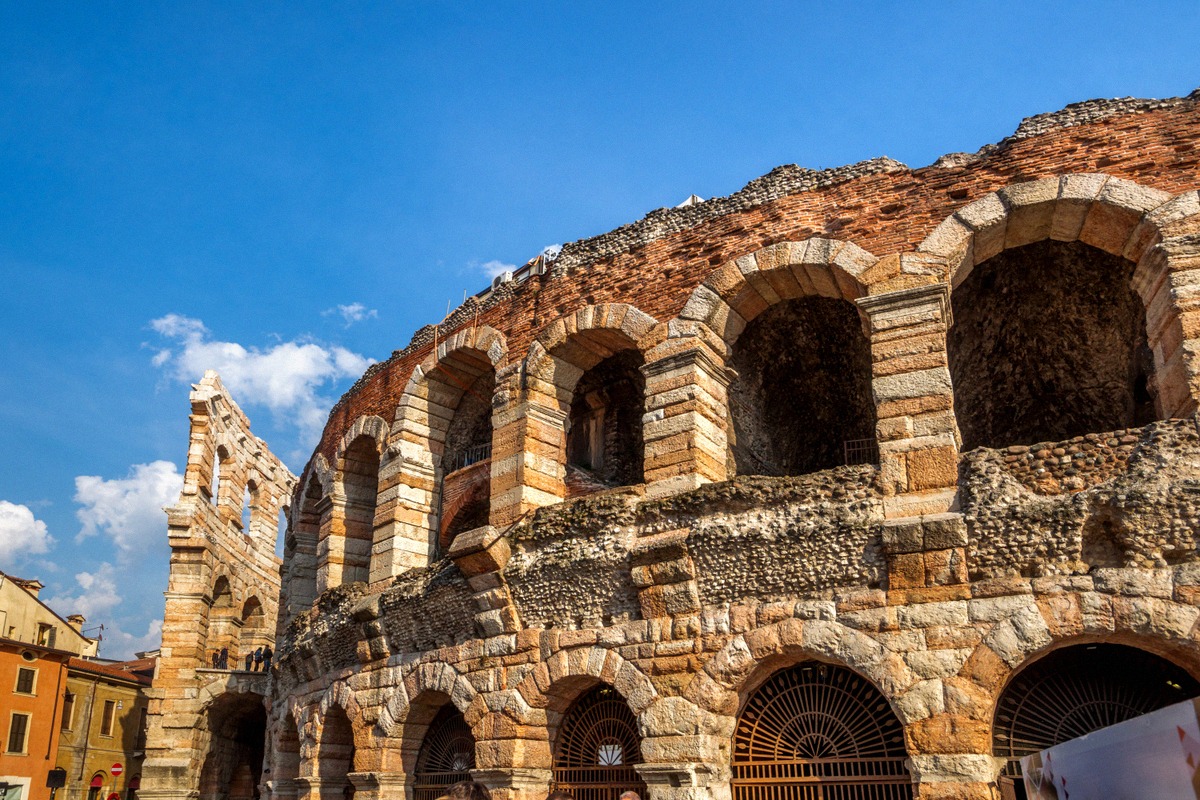
Stone seating tiers surround an oval arena on Piazza Bra. The Roman amphitheatre is open for daytime visits and hosts an opera festival in summer.
San Zeno Maggiore
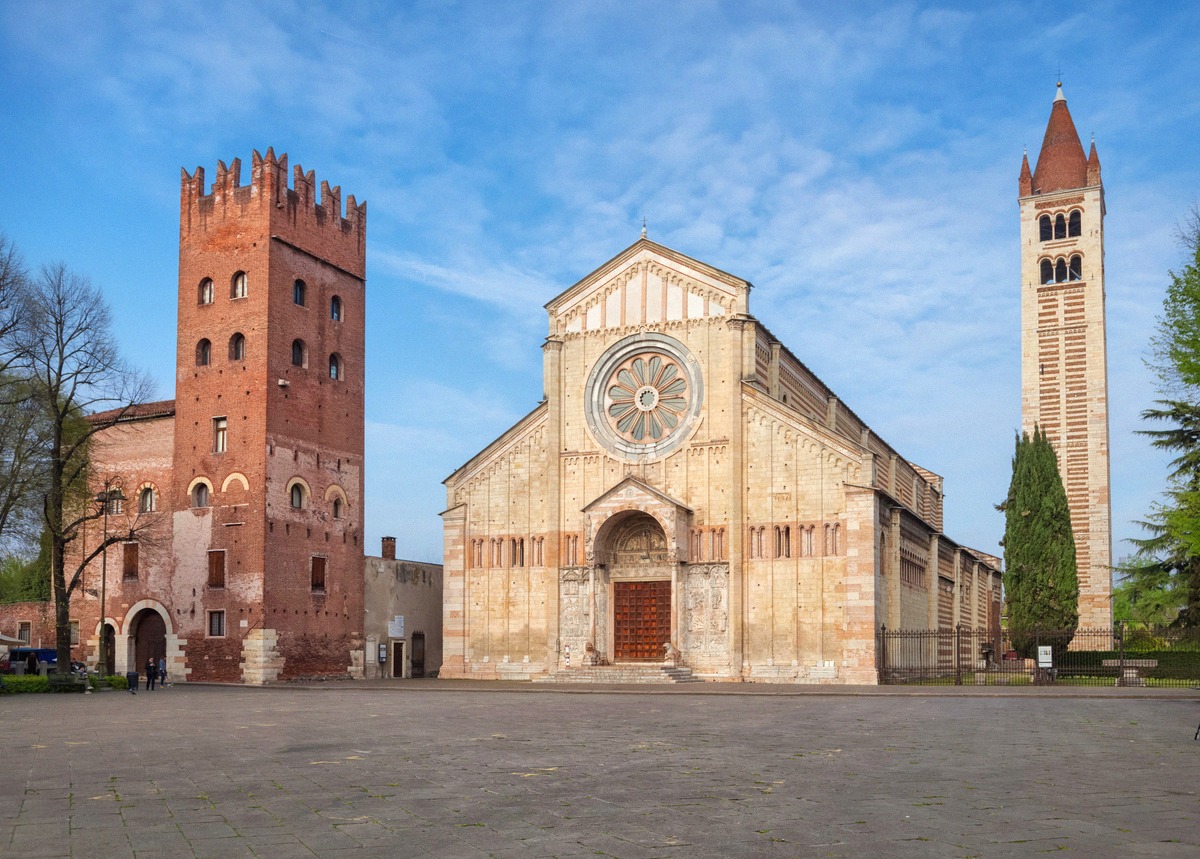
West of the old town, this Romanesque basilica stands above the tomb of St Zeno. From the square outside, its detached bell tower and the large wheel window above the entrance immediately catch the eye.
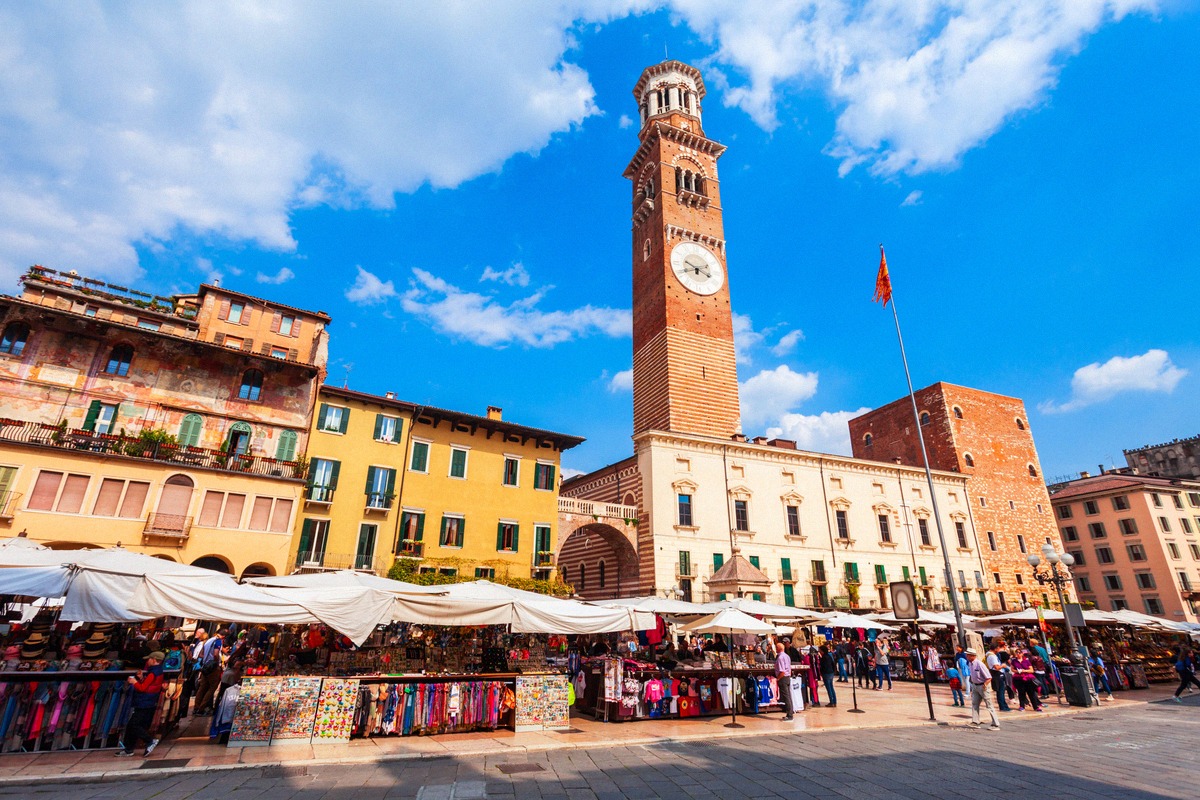
Piazza delle Erbe
Market stalls stand between a fountain and frescoed houses on the site of the Roman forum. The Torre dei Lamberti rises above the rooftops, and a passage leads to neighbouring Piazza dei Signori.