
Museums in Verona
Three routes lead through Verona’s art history. To the west, a castle houses a sculpture collection. At the Roman theatre, ancient finds are displayed above the tiers of seats. Modern paintings hang beside the old market square.
Contents
Art at Castelvecchio
The Museo di Castelvecchio is worth visiting for its medieval sculpture and Italian paintings. Carlo Scarpa created new routes through the old castle’s brick walls. His design is particularly clear around the equestrian statue of Cangrande. As you walk through the museum, you see horse and rider from different heights. Afterwards, cross the castle bridge for a view of the entire fortress beside the water.
Archaeology at the Teatro Romano
Ponte Pietra leads from the old town across the Adige to the Roman theatre. Its tiers of seats follow the slope of San Pietro hill. Above them stands a former monastery, now home to the Museo Archeologico al Teatro Romano. Its displays include Roman sculpture, mosaics, glass and household vessels, with finds from Verona and the surrounding province. If you know only the Arena on Piazza Bra, this is a different kind of ancient performance space. The theatre’s seating faced the stage beside the river, whereas the amphitheatre’s tiers completely surround its arena.
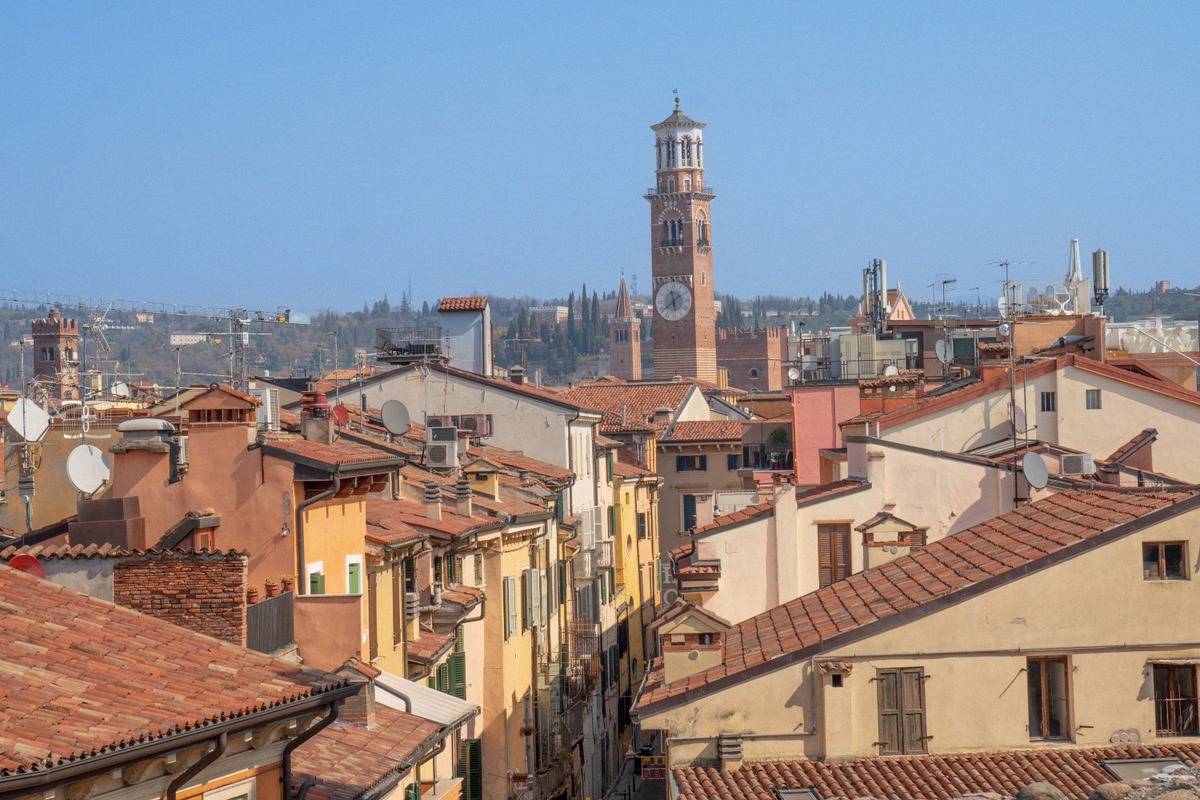
Modern art beside Torre dei Lamberti
The walk from Piazza delle Erbe to Piazza dei Signori passes Palazzo della Ragione. The open staircase in the Cortile del Mercato Vecchio leads to the Galleria d’Arte Moderna Achille Forti. Its collection spans the 19th century to the present day. Works include Francesco Hayez’s Meditazione and sculptures by Medardo Rosso. The gallery is named after the Veronese collector Achille Forti, who left his art to the city.
For a shorter visit in the same area, Casa di Giulietta is nearby. Its focus is the story of a literary character and the house Verona has dedicated to her.